Come and have fun with local useRs at SatRday LA on April 6, 2019. This is the first SatRday in LA, and the second in the states. If you have not heard of SatRday, it is a one-day affordable, inclusive, non-profit R conference organized by local R users.
Update: Video of the 2nd half of the talk is here (1st half was not recorded, sorry):
This video is no longer available on YouTube (original link).
In our next meetup, we’ll have Hadley (I think no introduction needed).
Packages made easy
by Hadley Wickham
It has been over 2 months since the first satRday conference ended and I shared some quick impressions on that, where I also promised a follow-up post on my experiences as ending up being the main organizer of the event – this is what you are reading now. Although the idea was born at the EARL Boston conference last year, and I decided to take part in the project while living in Los Angeles – the conference took place in Budapest after all as logistics seemed to be easier there thanks to my closer relationship to the Hungarian R User Group.
This meetup will be hosted by Google and we’ll have Peter Lipman and Pete Meyer talk about the data science/statistics projects they have been working on at Google.
Human Evaluation Comparisons: Common Framework with Applications
We designed a study to determine whether being on device influenced a quality evaluator’s perception of ads quality. Here, we present a common framework, developed into an internal R package, that was used to analyze the study.
The Shiny framework, by RStudio, is growing in popularity as a tool that makes it easy for R developers to leverage the web as a deployment platform for sharing their analysis. However, since the very earliest release of Shiny, the development group has been bombarded with the same series questions over and over again, questions like “Does it work with d3.js?” and “Can I use JavaScript in Shiny?”
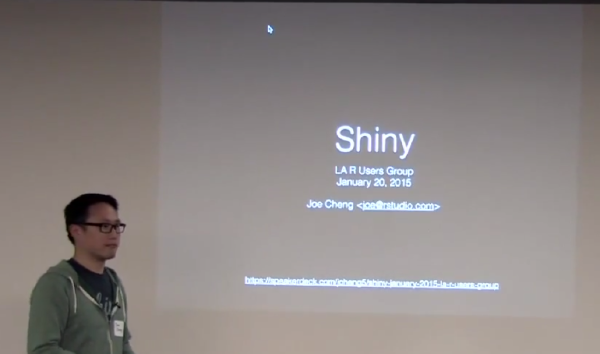
The Shiny framework is a web application framework for the R programming language, designed by Joe Cheng, to help R programmers turn their analysis into interactive web applications. Fortunately, it does without requiring that the R programmer know HTML, CSS or JavaScript - greatly widening the possible audience of users. At the January DataScience.LA R Meetup, we were fortunate to have Joe Cheng, Software Engineer at RStudio and original architect of Shiny present an introduction to Shiny.
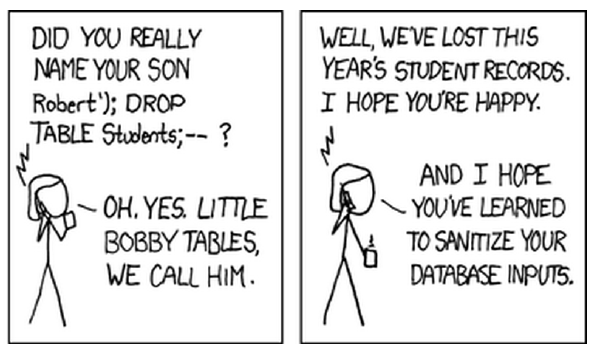
Shiny takes inputs from UI elements and sends them to the server, where the application can access them as R variables. While Shiny has security measures in place, as in any typical web application, it remains the developer’s responsibility to sanitize the inputs before using them. For example, Shiny has no way to protect you if you are using an input in a SQL query such as select ... from ... where field = 'input'. Someone manipulating the websocket communication can craft a specially-formatted input that can force the database to execute a query that it is not supposed to do, termed an SQL injection. This might give an attacker access to private data or the ability to do other nefarious things, and it is a common security issue.
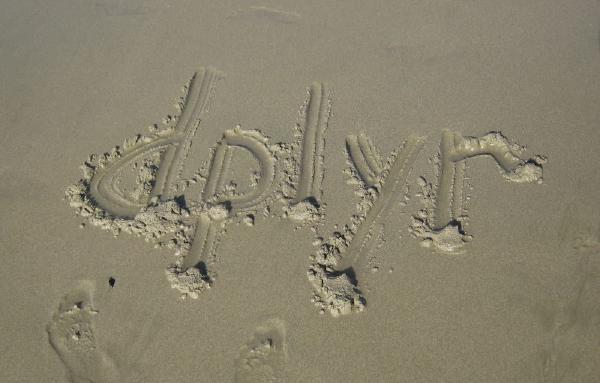
Yesterday, I published a post here on DataScience.LA with a simple/basic benchmark for dplyr. It was the main part of a short talk at our last Los Angeles R meetup. Below, I continue my thoughts with some reflections on dplyr’s API and philosophy, AKA the other part of my talk.
Earlier this month I gave a short talk about dplyr at the Los Angeles R meetup. It was one of the 5 talks about the useR! 2014 conference, and you can see the summaries and slides from the other 4 talks here.
At this meetup we’re fortunate to have RStudio’s lead developer Joe Cheng flying in from Seattle to talk about Shiny. Shiny makes it possible to develop interactive web applications by writing only a handful of R code. It lowers the barriers to constructing interactive dashboards that you can use to better explain your results to your boss and/or co-workers, or it can help you productionalize your analysis so that others in your company can make use of it regularly without the need to continually bother you.
Last week the LA R meetup featured another round of 5 speakers each highlighting a few things they had found interesting at the useR! 2014 conference. This was the second such event after the first one in September - probably because useR! was awesome enough that it inspired 10 volunteers to stand up on stage and talk more about it.
At this meetup, five more LA R meetup members will present short talks of what they have learned at useR! 2014. This is the 2nd round of talks about useR! since we had twice as many volunteers to speak as we could accommodate in one meetup (indeed, useR! was that awesome). The first round of talks at our September meetup is summarized here (with slides).
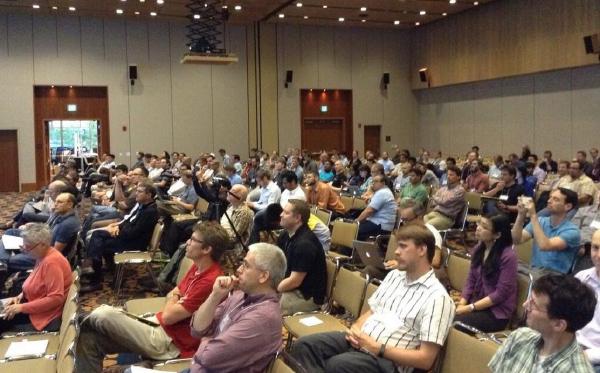
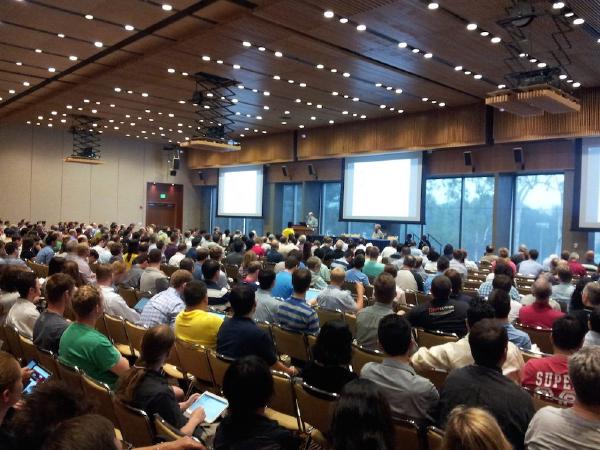
Last week the LA R meetup featured 5 speakers each highlighting a few things they had found interesting at the useR! 2014 conference (which I had the pleasure of helping to organize this year in Los Angeles). This meetup proved to be interesting even to those of us who attended the conference (which was about half of our audience), simply because there were so many cool things to hear and enough parallel sessions at the conference that no one could possibly capture all of the action.
(Please click here if the video above doesn’t load.)
The video above is from an event at useR! 2014 consisting of Yasmin Lucero’s presentation plus an incredible panel discussion, which is included here. The title of the panel was “R’s Place in the Production Environment”, and was moderated by Tareef Kawaf, President at RStudio. Five high-profile members of the R community were on this panel, spanning the gamut of the enterprise:
(Please click here if the video above doesn’t load.)
During useR! 2014, the LA R Meetup (run by Szilard Pafka) organized an event focused on R’s status in industry. This event took the form of a presentation by Yasmin Lucero, Senior Statistician at AOL-Gravity, followed by a panel discussion. The video above captures the presentation, where Yasmin provides an excellent overview of the current status of R in the enterprise and breaks down the taxonomy of solutions for which R is commonly chosen as a development platform. From batch reporting and dashboards for internal deployment to full blown public facing analytics data products, R has certainly found a home in business. Yasmin’s talk concludes with specific, operational aspects of managing R in the enterprise, such as library and dependency management. Enjoy the video and don’t forget to tune in for Part 2 of this session where the panel discussed “R’s Place in the Production Environment.”
Five LA R meetup members will present short talks of what they learned at useR! 2014
(plus we have 5 more volunteers for the following meetup!)
1. Timothy J. Triche, Jr., PhD
Fellow, Jane Anne Nohl Division of Hematology, USC/Norris Comprehensive Cancer Center
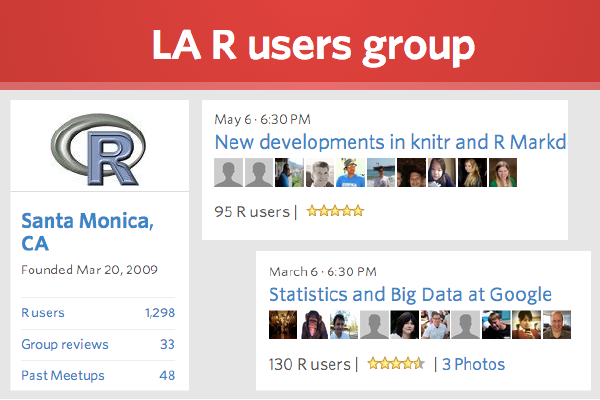
R is an open source software and programming language for data analysis, statistical modeling, visualization and data mining among other things. Recently, as the term “data science” has emerged to describe collectively these tasks, R has also become the primary tool of choice for data scientists. The LA R meetup began before this data science boom, back in 2009, by bringing together local users of R and featuring talks with world-class speakers while creating fruitful networking opportunities for its members. In retrospect, this group served as the very first data science meetup in Los Angeles and has significantly contributed to the development of our local data science community.