REGISTER HERE ON EVENTBRITE
DATE AND TIME
Wed, November 2, 2016 6:30 PM – 9:30 PM PDT Come to the PyDSLA November Meetup to hear talks from the community! In the last month, the organizers of the PyDSLA Meetup sent out a call for speakers, and the community answered with a number of great members coming forward willing and able to talk about some of the cool ways they are using the Python Data Science ecosystem to do cool stuff.
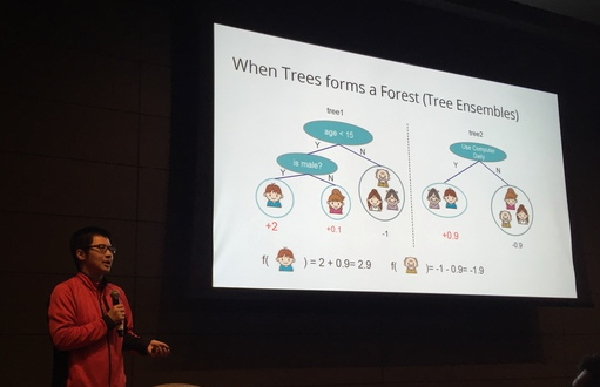
XGBoost is a fantastic open source implementation of Gradient Boosting Machines, a general purpose supervised learning method that achieves the highest accuracy on a wide range of datasets in practical applications. Deep learning is all the hype now, but apart from specific domains such as images, speech or text (i.e. problems with higher-level abstractions to be learnt and/or perception problems, where deep learning achieved some remarkable results indeed), it is usually outperformed by Gradient Boosting in a majority of general business domains and supervised learning applications. Proof of this and also because XGBoost has an easy-to-use interface from both R and Python, XGBoost has become a favorite tool in Kaggle competitions. Besides feature engineering, cross-validation and ensembling, XGBoost is a key ingredient for achieving the highest accuracy in many data science competitions and more importantly in practical applications.
SIGN UP HERE!
Video Available Now:
▶ PyDSLA The Nitty Gritty of Advanced Analytics Using Apache Spark in Python May 5, 2016 Talk by Miklos Christine, solutions engineer at Databricks
What has Kaggle learned from 2 million machine learning models?
Anthony Goldbloom, founder and CEO of Kaggle
UPDATE:Video recording of the talk available here
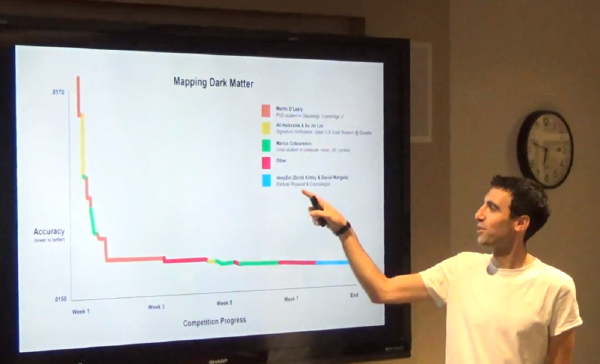
Kaggle is a community of almost 450K data scientists who have built almost 2MM machine learning models to participate in our competitions. Data scientists come to Kaggle to learn, collaborate and develop the state of the art in machine learning. This talk will cover some of the lessons on winning techniques we have learned from the Kaggle community.
Join PyDSLA for a talk by Erin LeDell Intro to Machine Learning with H2O and Python
Get your tickets HERE
Summary:
This workshop will provide an overview of how to use H2O, the scalable open source machine learning library, from Python. The core algorithms of H2O are implemented in Java, however, fully-featured APIs are available in R, Python, Scala, and also through a web interface. The focus of this hands-on workshop will be the “h2o” Python module.
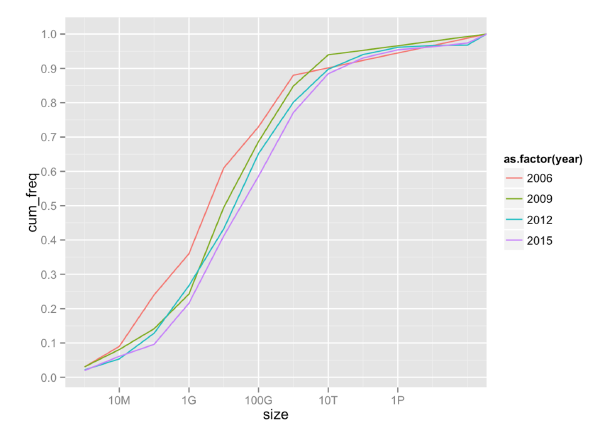
With so much hype about “big data” and the industry pushing for “big data” analytical tools for everyone, the question arises how many people have big data (for analytics) and how many of them really need these tools (which are more complex and often more immature compared to the traditional tools for analytics).
On May 14th at the Venice Arts Center, the Los Angeles Python and Data Science communities were fortunate to hear a talk from world-renowned expert and CEO of Dato, Carlos Guestrin. Often times when you have a meetup where a presenter is tightly identified with a company, the concern is that the presentation will fundamentally become a product pitch. We had nothing to be worried about in this case - Carlos presented for nearly an hour on a wide range of subjects from how the Machine Learning pipeline has changed over time to Deep Learning!
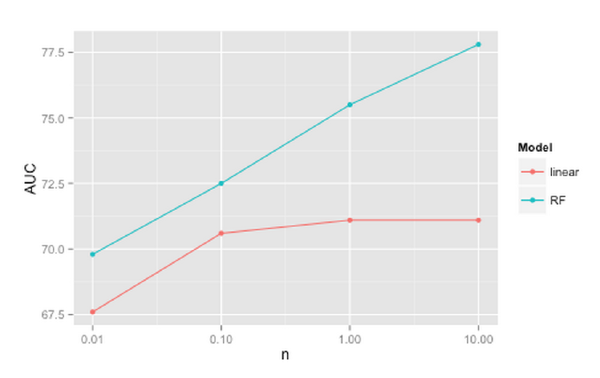
I currently have the need for machine learning tools that can deal with observations of the order of 10 millions in the context of binary classification. That kind of data is a few GBs in size and it fits comfortably nowadays in the RAM of a decent single machine. It is a trivial task for linear models, as there are plenty of open source tools that can train a logistic regression with this amount of data on a single machine in a few seconds, even while using only 1 processor core (many of these tools are single-threaded). Linear models are also the gold standard of large-scale machine learning that can run on clusters, processing very large distributed datasets.
Join PyDSLA for a talk by Matthew Rocklin about the high level APIs being developed for Python for expressive data manipulation and analysis.
Summary:
Pandas and NumPy serve us well. They give interactive high-level access to efficient low-level code. As datasets grow larger than memory this low-level code becomes obsolete but the high-level interface remains valuable. Blaze connects that high-level interface to a number of other computational systems like SQL, Mongo, or Spark, extending the scope of interactive analysis. In this talk we go over common use cases and Blaze as well as a bit of its internal design.
This was originally posted on the author’s LinkedIn
You will find lots of advice on how to get a job as a data scientist. I want to add some signal to the noise.
I happen to be hiring for a Data Scientist or two as of this writing, and was thinking of doing a blog post on offering advice for those looking. But then I thought of something better and more insightful: It is a cut-and-paste of an email that I sent to our Director of Talent Acquisition last week when he asked me, “Can you share with me what you’re looking for in regards to your Data Scientist candidates?”
It pains me to admit it, but even though I had visited their site, created an account, and played around with their tools, I didn’t really get the value proposition behind Plot.ly. I already use ggplot, bokeh, and d3.js, I already use knitr and ipython notebooks, so why do I need a new way of posting my plots on a web page?
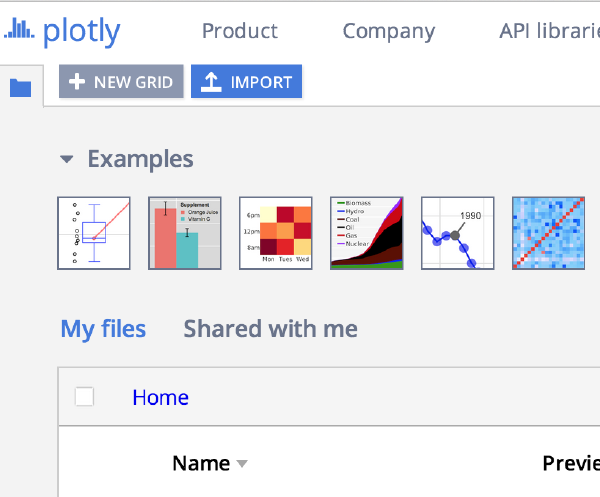
Plotly is a web-based platform for making graphs and analyzing data. Plotly’s APIs and web app let teams work together online to make 2D, 3D, and streaming graphs using R, Python, MATLAB, Julia, SAS, and and Excel, all together, all in one platform. The goal is to support technical and non-technical collaboration at all levels. Plotly translates ggplot2, matplotlib, and MATLAB plots into interactive, web-based, shareable plots.
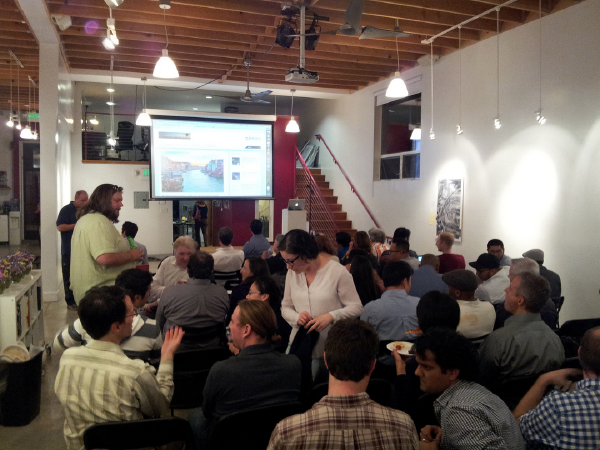
Last week, the Python Data Science LA meetup debuted with a fabulous event. It was already much anticipated, with more than 250 people showing interest (RSVP+waiting list), and a lucky 100 converged upon the hip Venice Arts venue to hear our speakers. Our sponsor OpenMail has also done a fantastic job in getting us this venue, bringing food+drinks and taking care of all the details. Thanks OpenMail Team!
I’m pleased to announce the first event of our new Python Data Science LA meetup, started by two of us here at DataScience.LA (our very own Szilard and Eduardo).
We’ll have 5 speakers at this event, covering various aspects of the Python Data Science ecosystem (NumPy, SciPy, pandas, matplotlib, scikit-learn, NetworkX, NLTK, IPython notebook, etc.)
This is a re-publication of a blog post from a blog I created not long before we got the idea to start DataScience.LA, and in many aspects it is the genesis of DSLA (the blog’s name, the people getting together - thanks Eduardo, Amelia and Leigh). It was also the spark that lead to the creation of the Python Data Science LA meetup.
Last week the LA R meetup featured 5 speakers each highlighting a few things they had found interesting at the useR! 2014 conference (which I had the pleasure of helping to organize this year in Los Angeles). This meetup proved to be interesting even to those of us who attended the conference (which was about half of our audience), simply because there were so many cool things to hear and enough parallel sessions at the conference that no one could possibly capture all of the action.
I am excited to announce that we are starting a new meetup group - Python Data Science LA - to serve the needs of the LA data science community using Python!
At an earlier Data Science/Machine Learning meetup we conducted an informal survey on tools for Data Science which showed that a large majority of data scientists use R or Python, with R taking a slight lead. (I know, those attending the meetups bias the results towards open source tools.)