
↓ Skip to main content
Welcome to Data Science LA!

Welcome to Data Science LA!

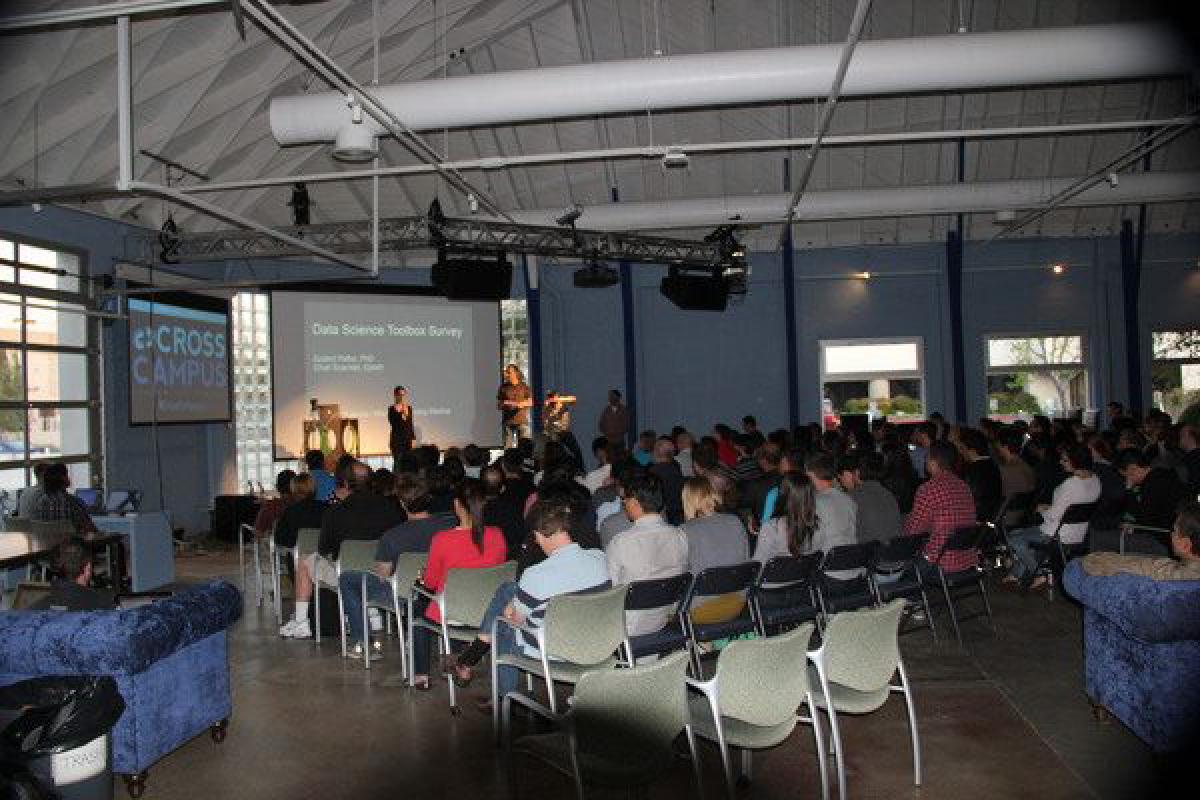
Welcome! We are launching DataScience.LA to provide a home for all the content (slides, code, videos etc.) for several meetups in LA (Data Science/Machine Learning, R, DataVis etc.) and to engage the Los Angeles data science community in an open, active discussion about best practices and new developments in the field.

DataScience.LA was founded by a team of data science professionals,  including a few who have been involved in building the LA data science community for years, and it is helped by a growing number of contributors. Our goal is to build DataScience.LA into the premiere information resource and virtual meeting place for the Los Angeles data science community.

In order to maximize the benefits of being part of this community, we encourage you to join our mailing list, which will allow you to receive priority announcements/RSVPs to our meetups, participate in raffles (books, T-shirts etc.), get access to community news, and much, much more.

To keep up-to-date, please follow us on Twitter @wwwDSLA (to get notifications on new posts), and use the #dsla hashtag (especially at our meetups since the best tweets will be featured on the blog).

Related

XGBoost workshop and meetup talk with Tianqi Chen

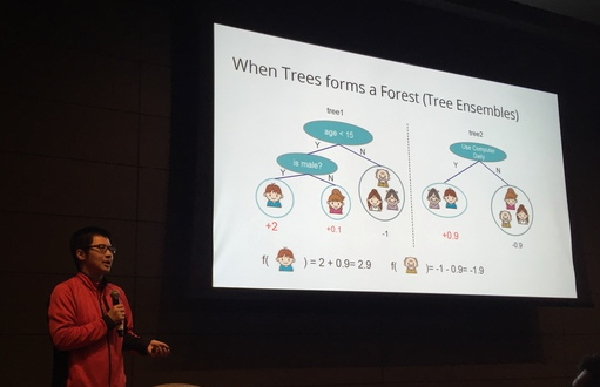
XGBoost is a fantastic open source implementation of Gradient Boosting Machines, a general purpose supervised learning method that achieves the highest accuracy on a wide range of datasets in practical applications. Deep learning is all the hype now, but apart from specific domains such as images, speech or text (i.e. problems with higher-level abstractions to be learnt and/or perception problems, where deep learning achieved some remarkable results indeed), it is usually outperformed by Gradient Boosting in a majority of general business domains and supervised learning applications. Proof of this and also because XGBoost has an easy-to-use interface from both R and Python, XGBoost has become a favorite tool in Kaggle competitions. Besides feature engineering, cross-validation and ensembling, XGBoost is a key ingredient for achieving the highest accuracy in many data science competitions and more importantly in practical applications.

What has Kaggle learned from 2 million machine learning models?

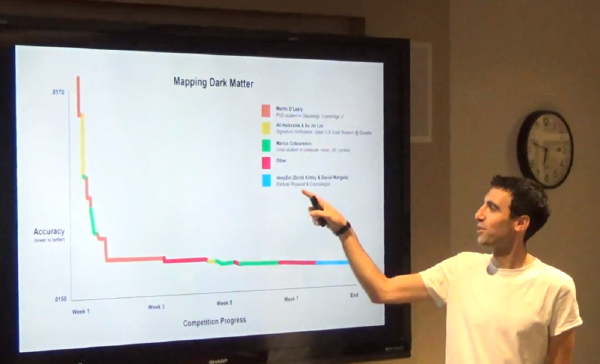
What has Kaggle learned from 2 million machine learning models? Anthony Goldbloom, founder and CEO of Kaggle UPDATE:Video recording of the talk available here Kaggle is a community of almost 450K data scientists who have built almost 2MM machine learning models to participate in our competitions. Data scientists come to Kaggle to learn, collaborate and develop the state of the art in machine learning. This talk will cover some of the lessons on winning techniques we have learned from the Kaggle community.